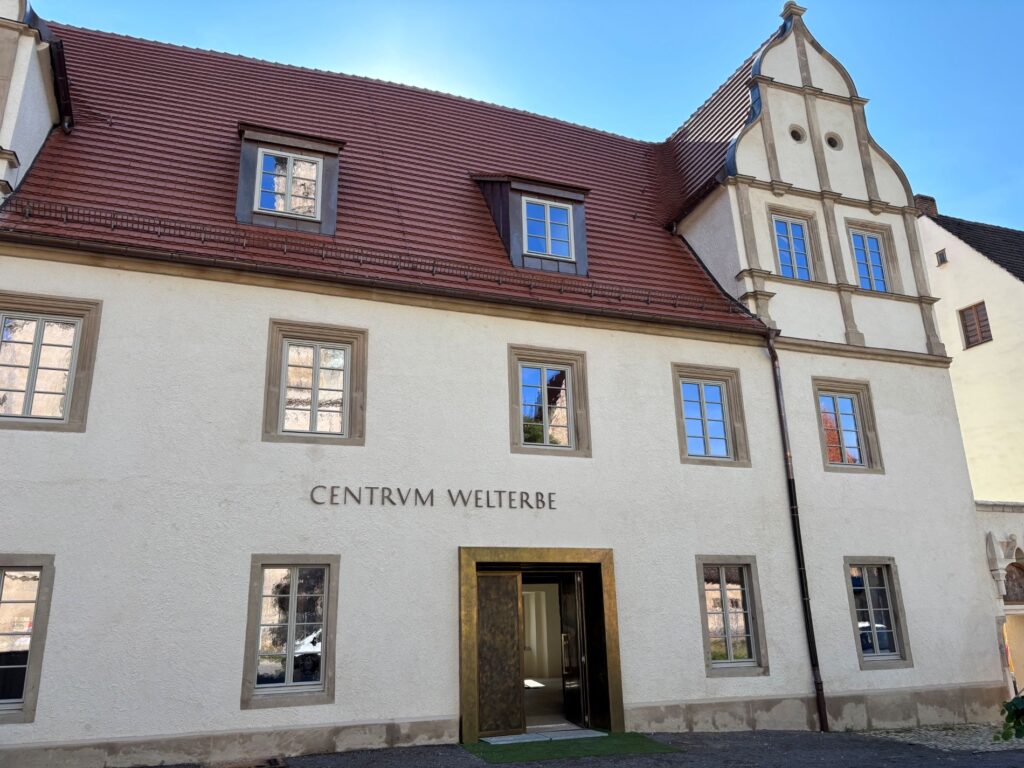



The historic Bishop’s Curia, together with the World Heritage Centre at Naumburg Cathedral, is set to become a vibrant hub for history, culture and community.
The new World Heritage Centre at Naumburg Cathedral was officially opened on 27 August 2026 with a festive ceremony. It is an extraordinary place where the impressive history of the former bishop’s curia – which has developed over the centuries – blends with a careful yet bold restoration in keeping with the building’s heritage, modern, interactive exhibitions and a warm, contemporary visitor service to create a fascinating overall experience.
Together with Minister of State Dr Wolfram Weimer, the Federal Government Commissioner for Culture and the Media, and Minister of State Rainer Robra, Head of the State Chancellery and Minister for Culture of the State of Saxony-Anhalt, numerous guests from the worlds of politics, culture, heritage conservation and tourism, as well as the planners, restorers and craft businesses involved in the construction, the United Cathedral Trustees opened the doors of the new building.
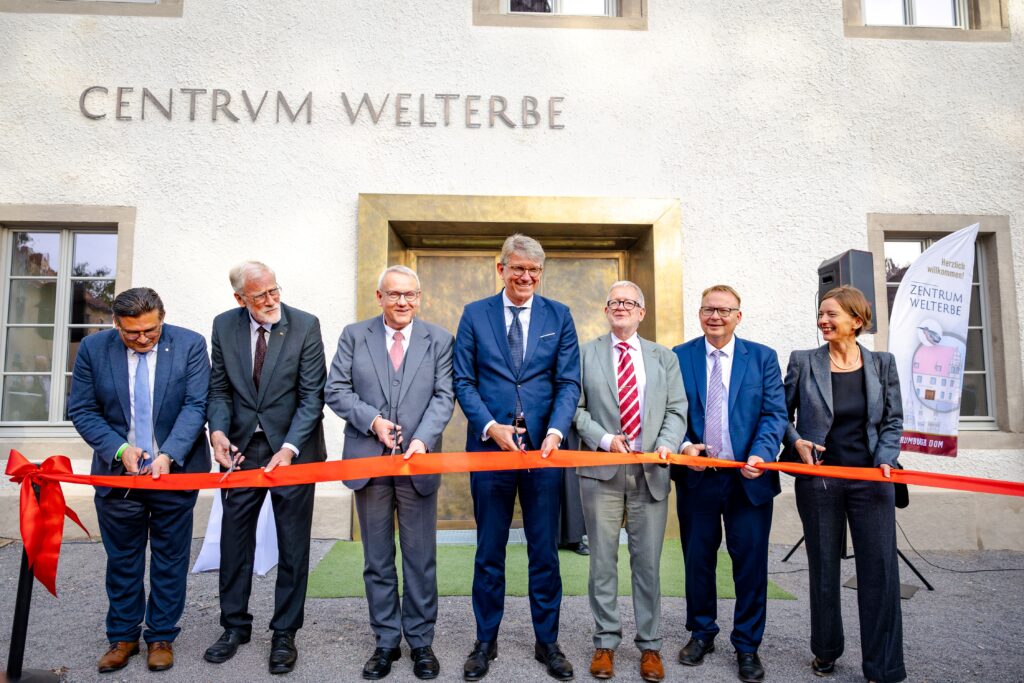
The opening marks the ceremonial conclusion of a project that is as ambitious as it is forward-looking, the starting point for which was the inclusion of Naumburg Cathedral on the UNESCO World Heritage List on 1 July 2018. The cathedral was recognised as a masterpiece of human creativity and as a significant convergence of human values in the development of architecture and art; in March 2023, work finally began on the renovation of the historic building opposite, transforming it into a centre designed to convey the spirit of the World Heritage site in a lasting, accessible and vibrant way.
World Heritage sites should inspire, spark curiosity and bring people together
Wolfram Weimer, Minister of State for Culture, said: „The new World Heritage Centre impressively demonstrates how we preserve our cultural heritage, make it accessible to the public, and breathe new life into it. Here, centuries-old European cultural history meets outstanding medieval art and architecture. This World Heritage site is not merely a backdrop to the past, but a living mission for our shared future. With the World Heritage Centre, Naumburg is gaining a venue that will have an impact far beyond the region.“
A cultural asset for Naumburg and Saxony-Anhalt
Rainer Robra, Minister of State and Minister for Culture of the State of Saxony-Anhalt, emphasises: „The World Heritage Centre is a great asset for Naumburg, for the Saale-Unstrut cultural landscape and for the whole of Saxony-Anhalt as a cultural region. Naumburg Cathedral, with its unique west choir, is one of our state’s outstanding cultural treasures. The careful restoration of the historic bishop’s curia exemplifies how heritage-sensitive renovation and contemporary outreach can be combined. I am convinced that this new centre will open up new ways of engaging with this special cultural heritage for visitors from all over the world as well as for people in the region, and that it will become a place of education and encounter.“.
Bringing history to life
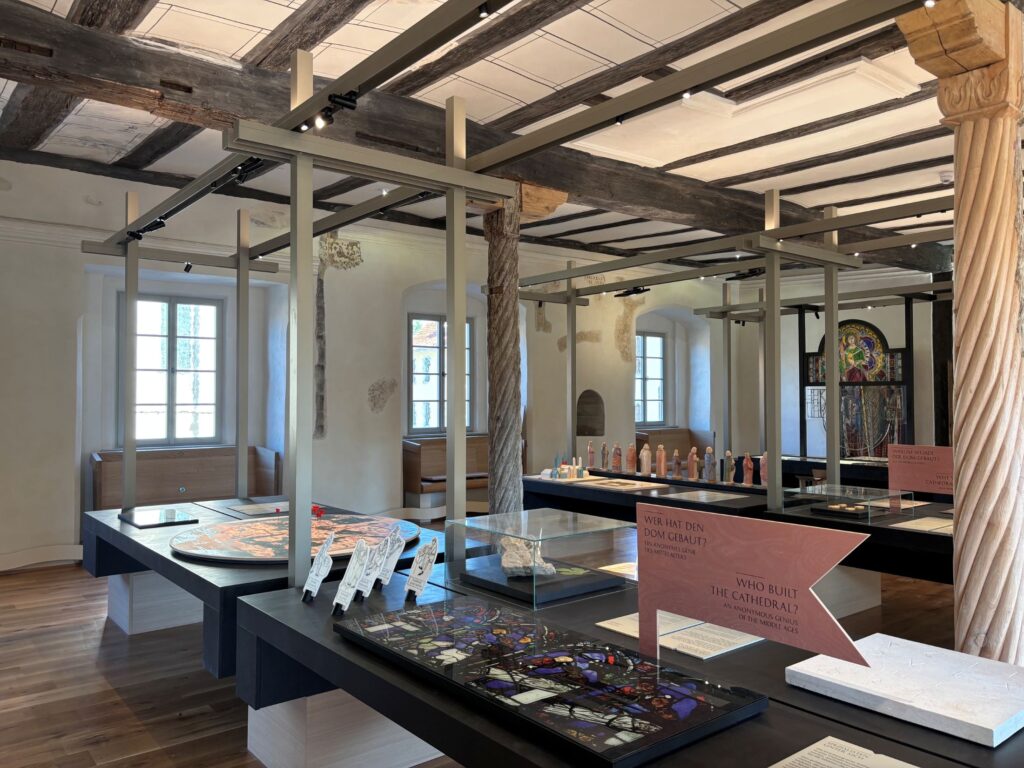
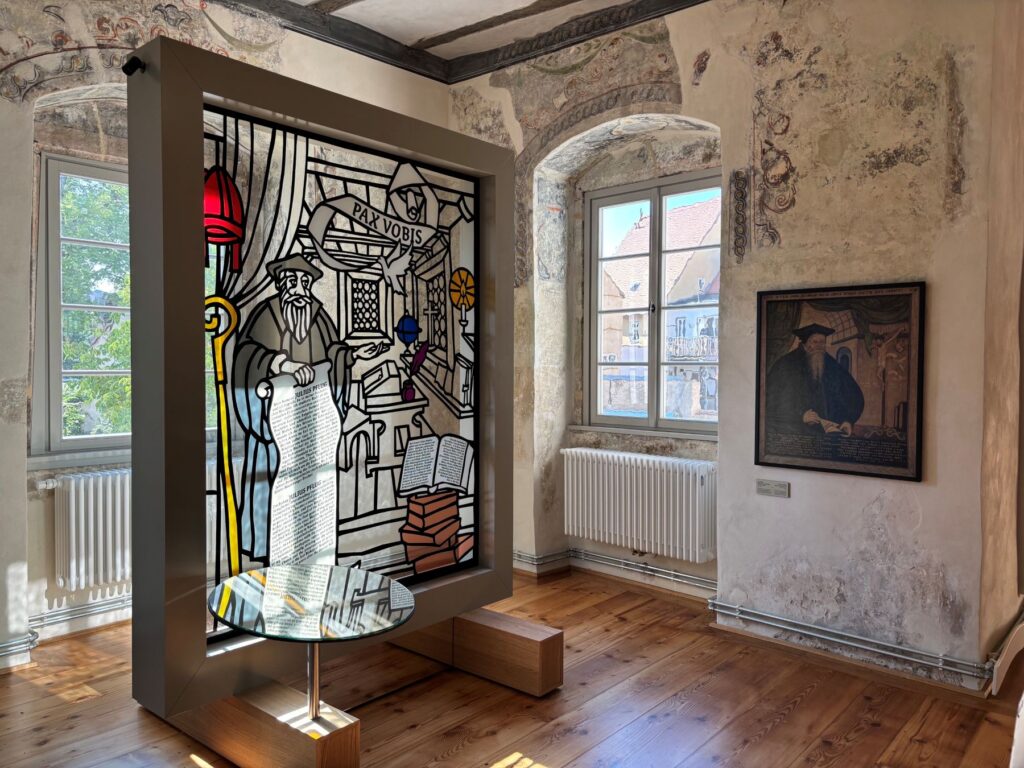
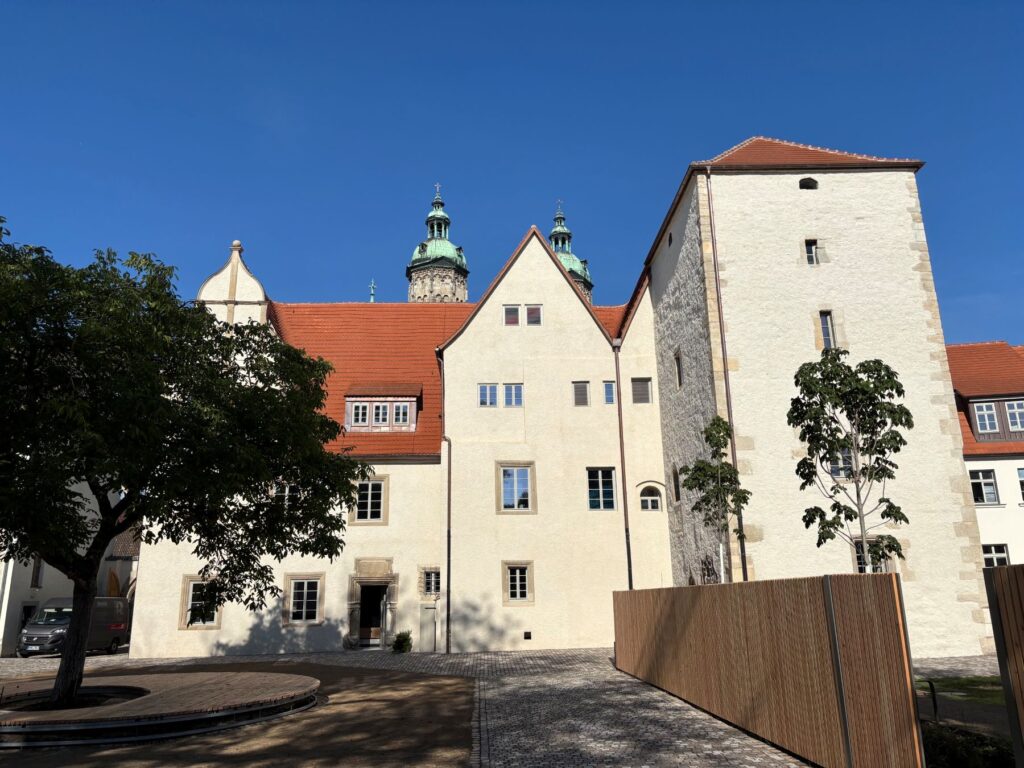
The World Heritage Centre has been established in one of the most historically significant buildings on Naumburg Cathedral Square, in the former Episcopal Curia, the oldest part of which, a Romanesque residential tower, dates back to the mid-12th century. Following the devastating fire in Naumburg in 1532, Bishop Julius Pflug acquired the ruins in 1557 and had them converted into a stately Renaissance-style residence; later, canons lived here, adapting the building to the tastes of their respective eras, before it was used, amongst other things, as a military hospital, a polyclinic, a public health office, a pottery workshop and an office. The result is a building rich in history, in which visible traces of the Romanesque, Gothic, Renaissance and Baroque periods are layered upon one another and complement each other to this day.
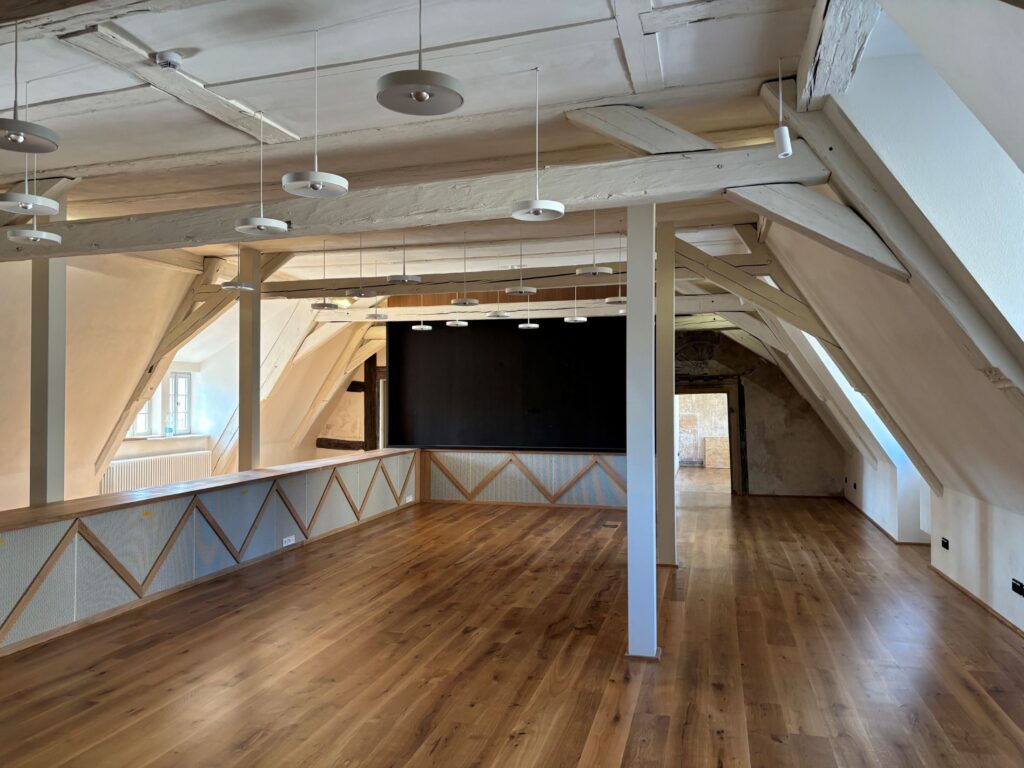
The restoration of this valuable building, which had suffered severe damage in numerous places, presented all those involved with extraordinary challenges; the focus was not on recreating a supposedly flawless historical state, but on carefully interpreting, securing and preserving the various layers of history. Amongst other things, dilapidated load-bearing structures had to be stabilised using new steel trusses in the attic; severely damaged ceiling beams had to be restored whilst preserving as much of the original material as possible; and precious surfaces, fragments of paintings and numerous historical details had to be carefully revealed and restored.
„The cathedral curia, with its Romanesque residential tower and outbuildings, surprised, challenged and inspired us throughout the entire construction period,“ sums up Prof. Regine Hartkopf, cathedral architect for the United Cathedral Foundations, who, with her architectural practice „denk mal architektur“, is also responsible for the overall planning of the centre. „Much of what we see today was hidden and forgotten. Behind almost every wall, beneath numerous layers of paint and in many structural details, ever new traces of the building’s long history came to light. Our aim was therefore not to give the building a uniform, smooth appearance. Rather, we wanted to leave its discontinuities, transformations and precious traces of age visible, to preserve the historic fabric with the utmost care, whilst at the same time creating spaces that are open, inviting and, of course, functional. Today, old and new are clearly distinguishable yet form a harmonious whole. Their interplay creates spatial qualities that underline the centre’s purpose as a venue for communicating World Heritage, whilst also enabling contemporary use. For me, this is one of the great qualities of the World Heritage Centre.“
A new starting point for the cathedral and the entire World Heritage region
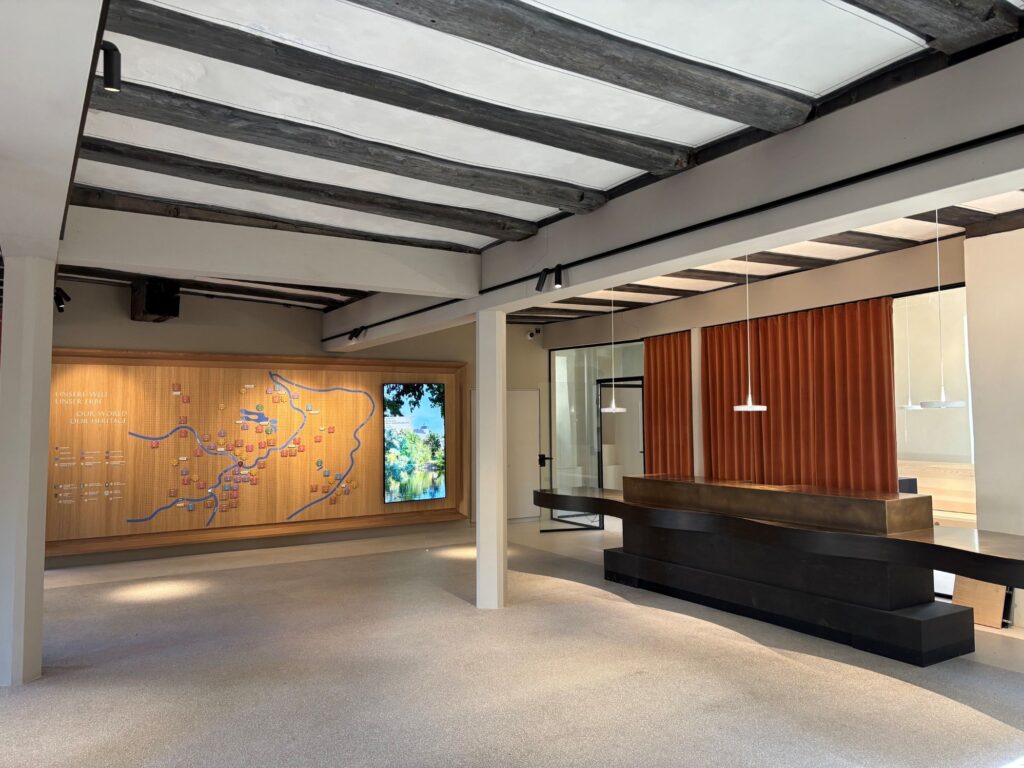
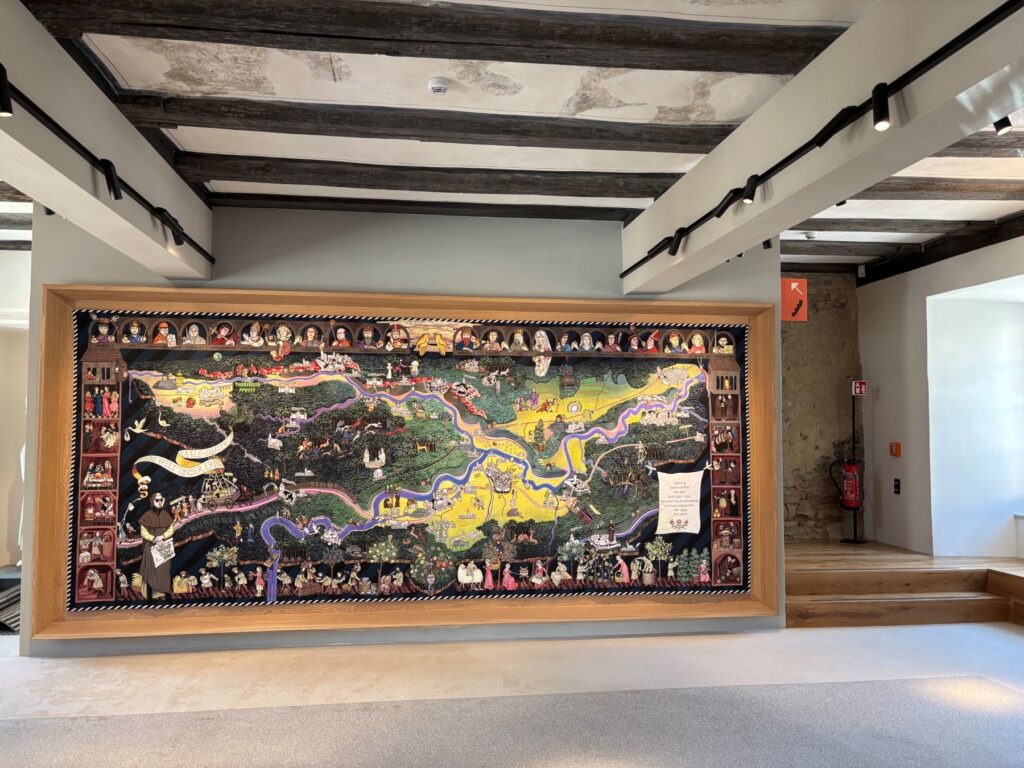
From next year onwards, the new centre will welcome visitors to Naumburg Cathedral and the wider region right from the ground floor; this is where the cathedral ticket office (from next year), combined ticket offers and a comprehensive information service will be located, whilst at the same time offering views of the exceptionally rich cultural landscape along the Saale, Unstrut and Elster, where medieval towns, monasteries, castles, villages, vineyards, historical traditions and living customs come together within a remarkably compact area. A large-scale tapestry vividly recounts the history of this landscape and makes it clear from the moment you arrive that Naumburg Cathedral does not stand alone, but is the centre of a cultural network that has grown over the centuries.
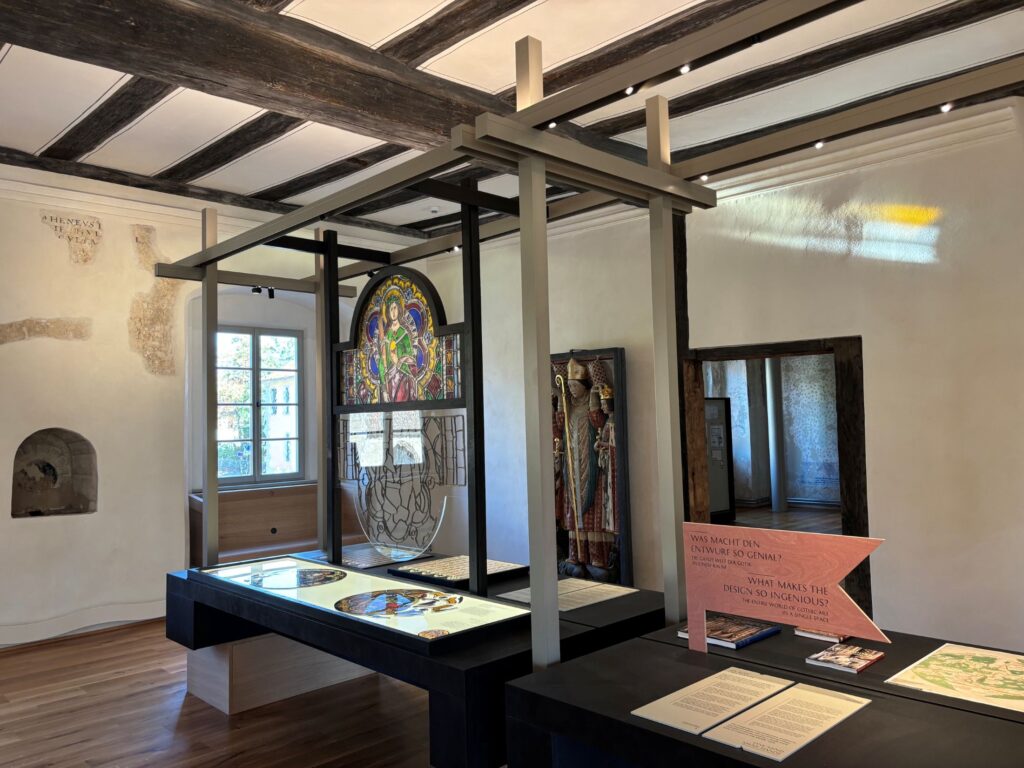
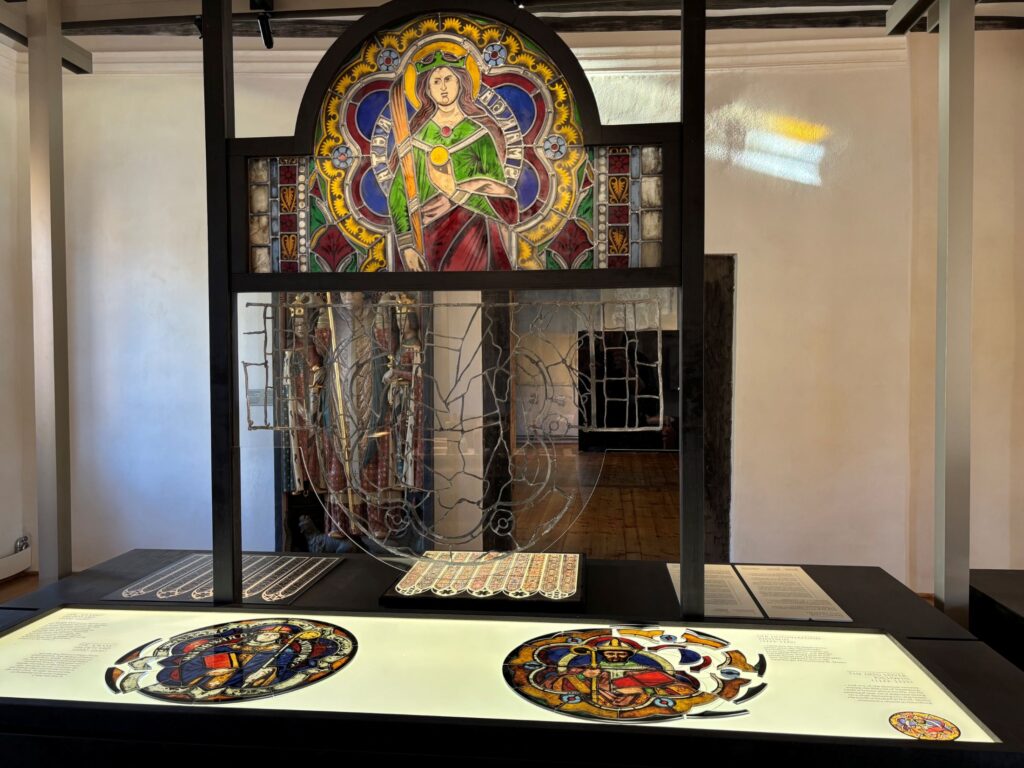
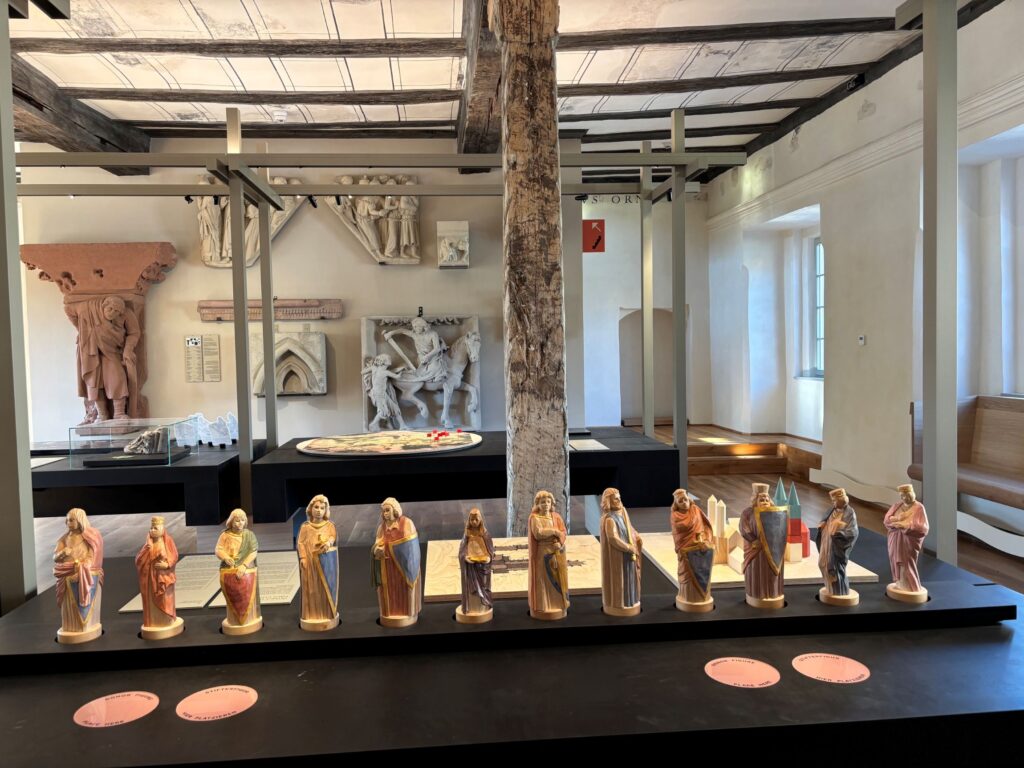
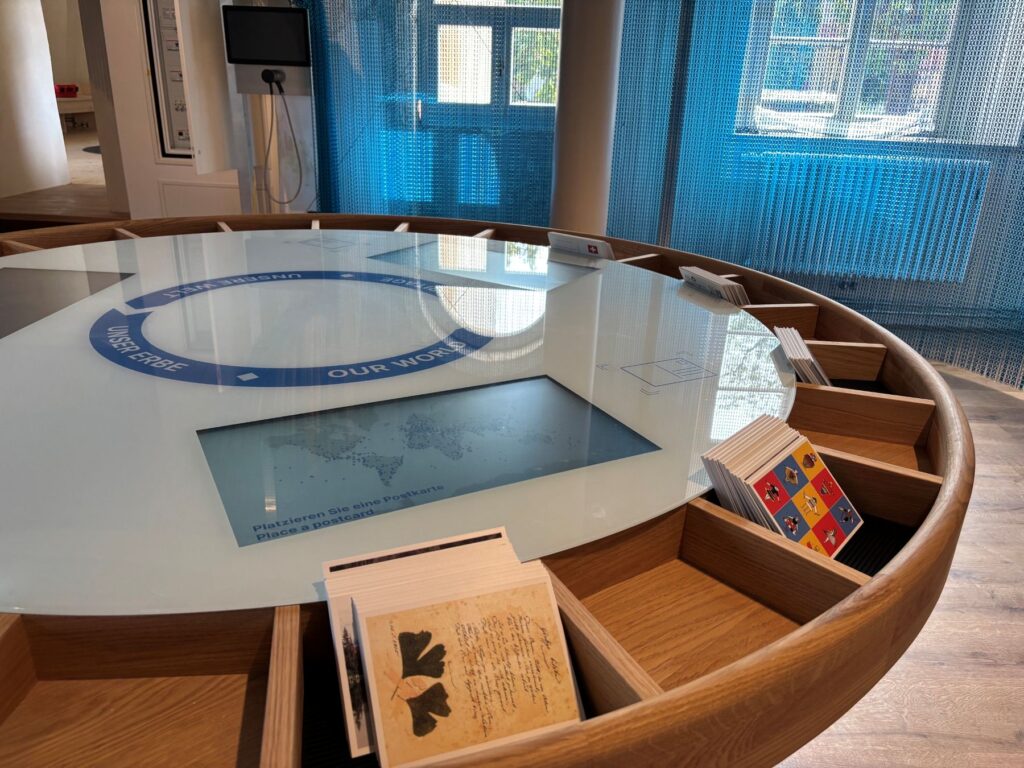
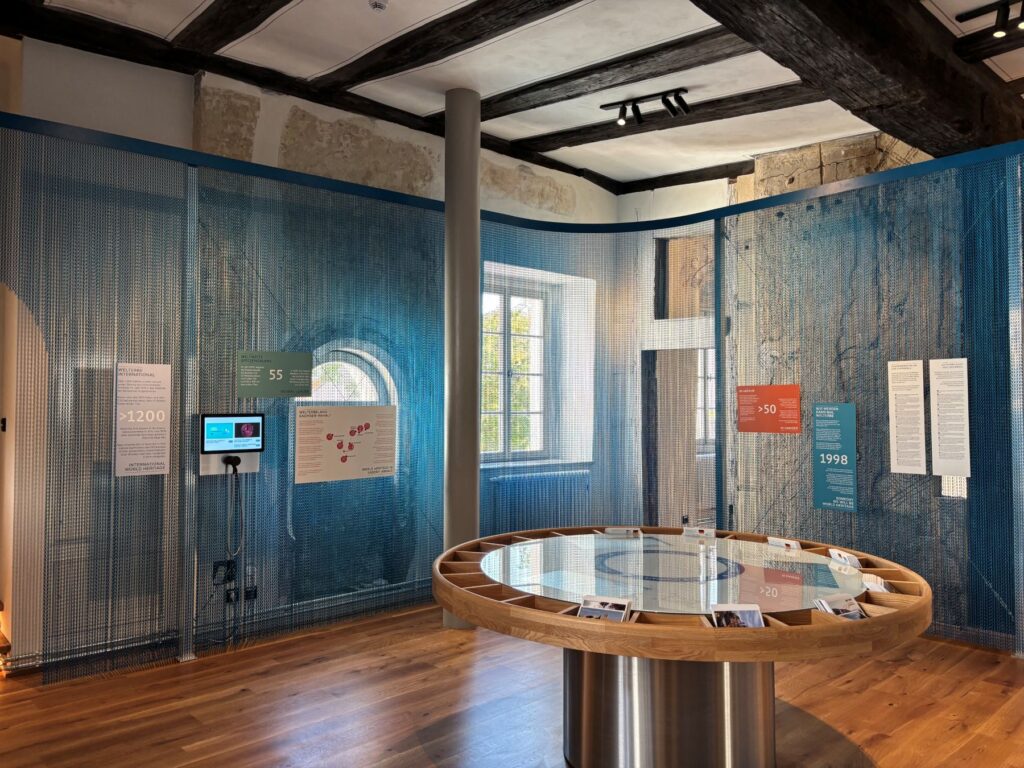
On the upper floor, visitors can enjoy a free, multilingual exhibition that explains the global philosophy behind UNESCO as well as Saxony-Anhalt’s outstanding World Heritage sites, the exceptional universal value of Naumburg Cathedral and the distinctive cultural landscape along the Saale and Unstrut rivers. Interactive stations, historical exhibits, surprising displays and a wide range of educational activities lead visitors to the statues of the founders, the medieval stained-glass windows, the master builders’ workshop and the Naumburg Master – whose name remains unknown to this day – whose unique combination of architecture, sculpture and stained glass has transformed the cathedral’s west choir into a total work of art of world-class standing.
„With the World Heritage Centre, a long-cherished wish has become a reality, for the designation of Naumburg Cathedral as a UNESCO World Heritage Site was, for us from the very beginning, not only a great honour but, above all, a commitment to to communicate its outstanding universal value on a lasting basis, to place its significance within a broader context, and to inspire people from the region as well as visitors from all over the world to appreciate this unique heritage,“ emphasises Dr Holger Kunde, Director of the United Cathedral Foundations. „The centre is far more than just a new visitor centre; it is a gateway to Naumburg Cathedral, a showcase for the cultural landscape along the Saale and Unstrut rivers, and a vibrant place where history, education, research and personal encounters come together.“
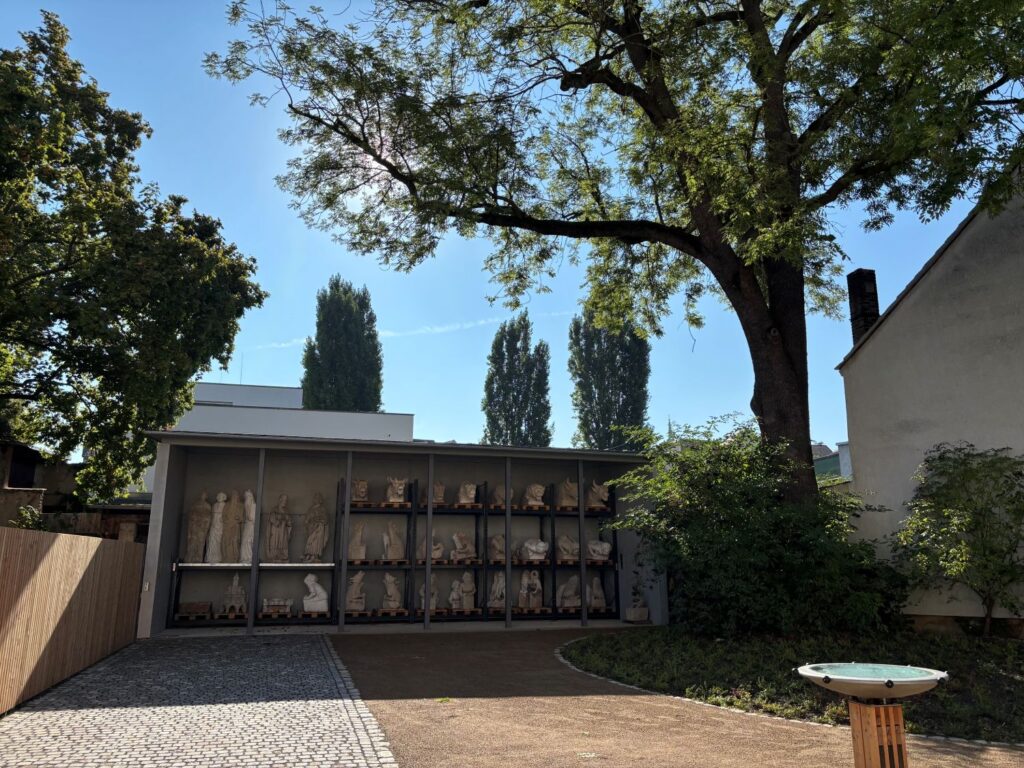
Even beyond the exhibition, the building offers a wealth of new possibilities: the spacious attic will in future be used for lectures, seminars, workshops, readings and cultural events, whilst also offering a stunning view of Naumburg Cathedral, situated directly opposite; the Lapidarium preserves stone artefacts from centuries past, whilst the newly landscaped Curia Garden, with its historic trees, tranquil sightlines and sheltered seating areas, has become a green oasis in the heart of the cathedral square. In this way, the building, the garden and the cathedral enter into a new, surprisingly harmonious dialogue.
The Dean of the United Cathedral Chapter, Prof. Dr Jörg Ulrich, is impressed by the completed centre: „As the World Heritage Centre moves into the beautifully restored old bishop’s curia, the connection between this building and the cathedral is emphasised and, at the same time, it is breathed new life into. For the building, which in days gone by was reserved for the bishop, his staff and guests, has now become a meeting place for people from all over the world. They are all to be welcomed to Naumburg and to the cathedral! The great humanist and European Julius Pflug, who once resided here as bishop, would surely be just as enthusiastic as I am.“
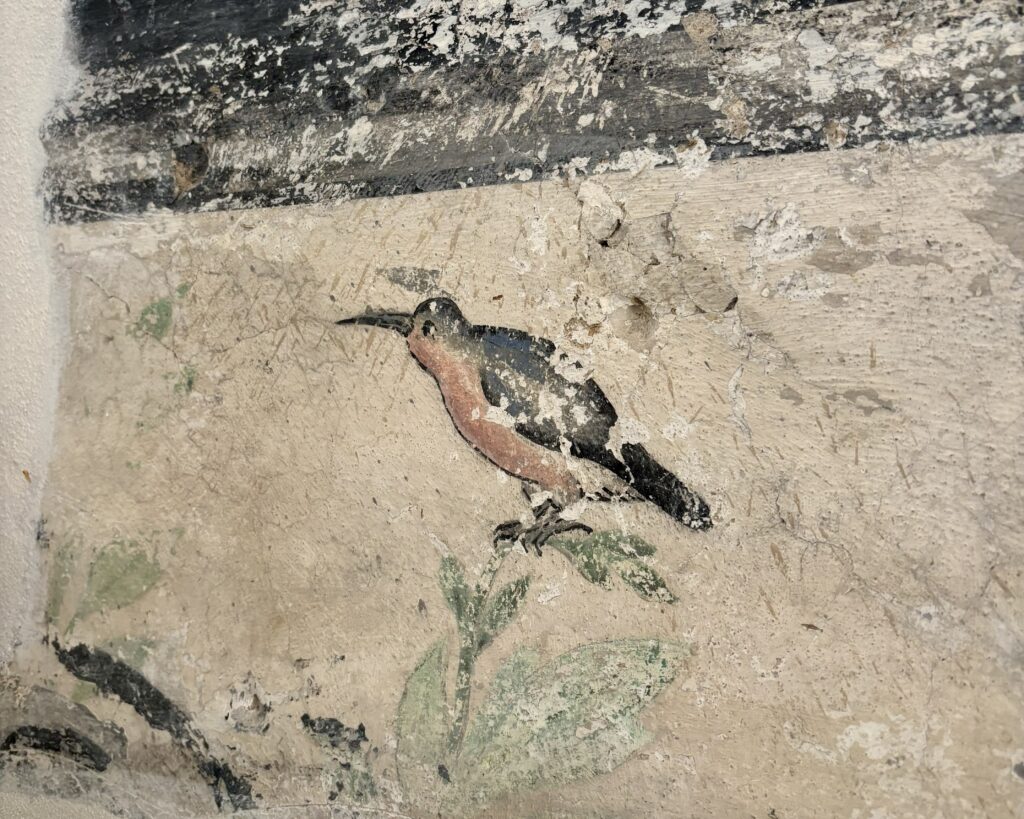
A particularly charming detail of the house was rediscovered during the restoration work: the colourful Renaissance painting of a kingfisher, which will in future be known as Henri As the World Heritage Centre’s mascot, its main role is to accompany the youngest visitors in particular and introduce them to the history of the building, the cathedral and the region in a playful way.
Thanks to our sponsors and supporters
A project on a scale of around 13 million euros, which combines the challenging task of preserving a building that has evolved over centuries in accordance with heritage conservation principles, the redesign of the adjacent historic gardens and the development of a modern, internationally oriented exhibition – could only be realised through the close and trusting collaboration of numerous strong partners.
The United Cathedral Foundations would like to thank the Federal Government and the State of Saxony-Anhalt for their extensive support under the Federal-State Joint Programme „Improvement of the Regional Economic Structure“ (GRW), from which federal and state funds were provided in equal shares for the refurbishment of the World Heritage Centre, including the adjoining gardens. Sincere thanks are also extended to the Burgenlandkreis district for its valuable contribution, as well as to the East German Savings Banks Foundation, together with the Sparkasse Burgenlandkreis, the State of Saxony-Anhalt and the Friede Springer Foundation, whose generous support has made the ambitious museum exhibition in the Bishop’s Curia possible. The GRW is generally jointly funded by the federal and state governments; the federal ministry currently responsible has been known as the Federal Ministry for Economic Affairs and Energy since 2025. (Federal Ministry for Economic Affairs).
Grand Opening Weekend: Art – History – Indulgence
Following today’s ceremony, all residents of Naumburg, people from the region and visitors from near and far are invited to come and discover the new World Heritage Centre for themselves for the first time during the opening weekend. Under the motto „Art – History – Pleasure“ These free viewings and guided tours of the house are combined with creative activities organised by the KinderDomBauhütte, an information stand for Saxony-Anhalt’s World Heritage sites, and a varied arts and crafts market featuring ceramics, wood and textiles, as well as selected wines and culinary specialities from the Saale-Unstrut region.
Friday, 28 August 2026, 2 pm to 6 pm
Saturday, 29 August 2026, 10 am to 6 pm
Sunday, 30 August 2026, 10 am to 6 pm
Admission to the World Heritage Centre and the guided tours on offer are free of charge throughout the opening weekend. The arts and crafts market is organised by the Manuela Fiebig Textile Workshop.